The Chapter’s Signature
Home of Just
Charleston is the birthplace of Dr. Ernest Everett Just (1883–1941), pioneering biologist and one of the four Founders of Omega Psi Phi Fraternity, Inc. No other chapter can call his hometown its own.
Where It Began
Born in the Lowcountry
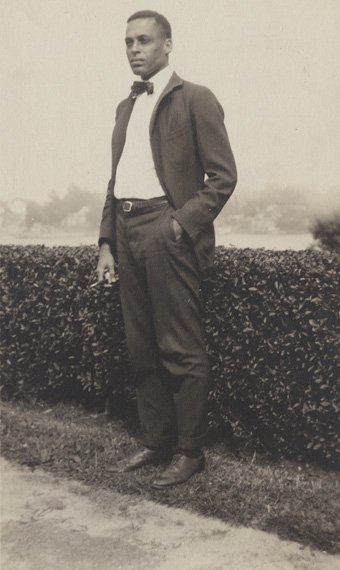
Ernest Everett Just was born in Charleston, South Carolina, on August 14, 1883, to Charles Just Jr. and Mary Matthews Just. His father and grandfather were builders, and both died when Ernest was only four years old, leaving his mother to raise the family on her own.
Mary Matthews Just taught at a school for Black children and spent her summers working in the phosphate mines on James Island. She encouraged several Black families to settle and farm nearby land, and the community they built, now part of West Ashley, came to be called Maryville in her honor.
After surviving a serious bout of typhoid, Ernest had to learn to read and write all over again. At 13 he enrolled at the school in Orangeburg now known as South Carolina State University, and at 16 he headed north to Kimball Union Academy in New Hampshire, where he finished the four-year program in three years and graduated at the top of his class in 1903.
Our Founder
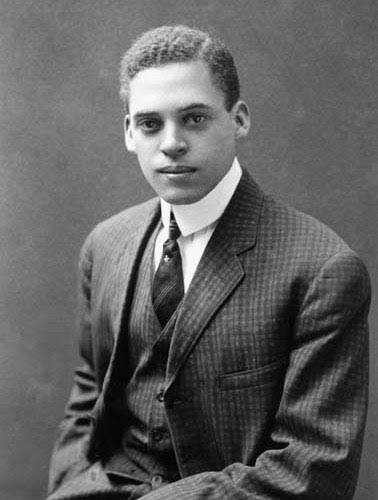
A Founder of Omega Psi Phi
After graduating magna cum laude from Dartmouth College in 1907 and earning election to Phi Beta Kappa, Just joined the faculty of Howard University in Washington, D.C.
On November 17, 1911, three Howard students, Edgar Amos Love, Oscar James Cooper, and Frank Coleman, approached their young professor about starting a fraternity. Together the four men founded Omega Psi Phi. Just helped work through the administration’s objections, and Alpha Chapter was chartered on December 15, 1911.
Every Omega man traces his Fraternity back to a son of Charleston. That is why the Brothers of Mu Alpha proudly call this city the Home of Just.
Milestones
A Life of Firsts
August 14, 1883
Born in Charleston
Ernest Everett Just is born in Charleston, South Carolina.
1896
Industrial Agricultural and Mechanical College of South Carolina
College later known as South Carolina State University.
1907
Dartmouth Graduate
Graduates magna cum laude from Dartmouth and begins teaching at Howard University.
1909
Woods Hole
Begins summers of research at the Marine Biological Laboratory in Woods Hole, Massachusetts.
November 17, 1911
Omega Psi Phi Founded
Co-founds Omega Psi Phi Fraternity with Edgar Amos Love, Oscar James Cooper, and Frank Coleman.
1912
Head of Zoology
Becomes head of Howard’s new Department of Zoology, a post he holds for the rest of his life.
February 12, 1915
First Spingarn Medalist
Becomes the first person to receive the NAACP’s Spingarn Medal.
1916
Ph.D., University of Chicago
Earns a doctorate in zoology, one of the first African Americans to receive a Ph.D. from a major university.
1930
Kaiser Wilhelm Institute
Becomes the first American invited to conduct research at the Kaiser Wilhelm Institute in Berlin.
1939
Landmark Publications
Publishes The Biology of the Cell Surface and Basic Methods for Experiments on Eggs of Marine Animals.
October 27, 1941
Passing
Dies in Washington, D.C., at age 58.
His Science
Pioneer of the Living Cell
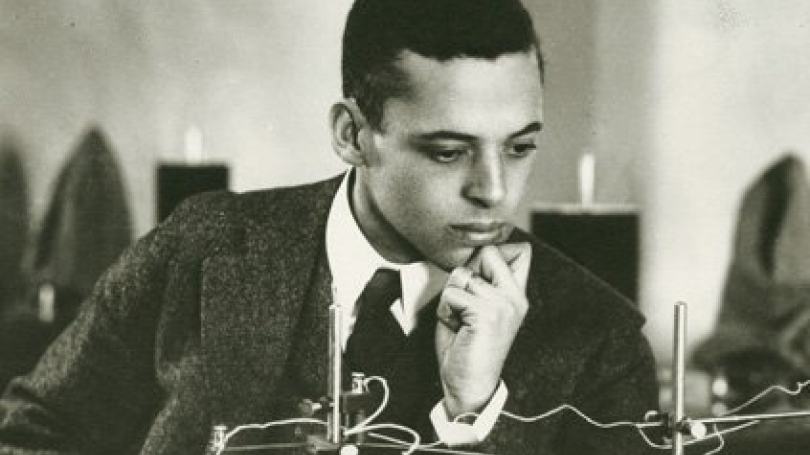
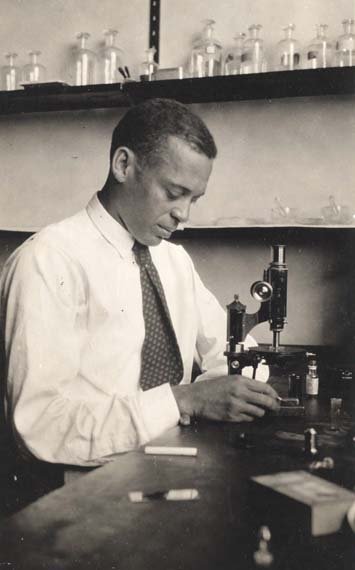
For roughly two decades, Just spent nearly every summer at Woods Hole studying the eggs and embryos of marine animals such as sea urchins and marine worms. He insisted that cells be studied whole and alive, under conditions as close to nature as possible.
His research showed that the cell surface plays a central role in how organisms develop, and he discovered the “fast block” that keeps an egg from being fertilized by more than one sperm. He published more than seventy papers and two books.
Racism kept him from ever receiving an appointment at a major American university, but he found respect in Europe, working in Naples, Berlin, Paris, and Roscoff between 1929 and 1938.
In Pictures
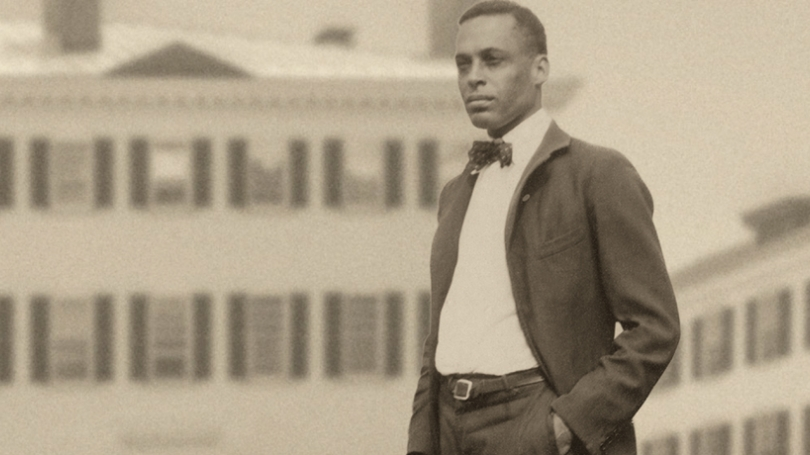
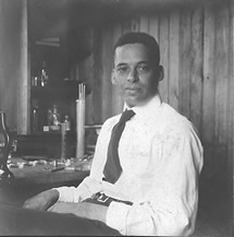
Dr. Just Through the Years
Charleston Omega Heritage
Walk in His Footsteps
Four places in Charleston tell the story of Dr. Just, his family, and the chapter that carries his legacy.
Tap a stop to see it on the map. Markers 1 and 2 show the general area.
Legacy
Honoring Dr. Just Today
- 1983: Kenneth R. Manning publishes Black Apollo of Science: The Life of Ernest Everett Just, a Pulitzer Prize finalist.
- 1994: The American Society for Cell Biology establishes a lecture and award in his name.
- 1996: The U.S. Postal Service honors him with a Black Heritage stamp.
- Since 2000: The Medical University of South Carolina hosts the annual Ernest E. Just Symposium here in Charleston.
“Life is the harmonious organization of events.”
Dr. Ernest Everett Just, The Biology of the Cell Surface (1939)
Sources: Wikipedia and the South Carolina Encyclopedia. Historical photographs are in the public domain.